Look at the Mustangs of Las Colinas from more than one angle
Give the Williams Square sculpture group a few minutes from across the plaza and at closer range.

In this article
From one part of Williams Square, the Mustangs of Las Colinas can read as a herd in motion. From another, a visitor can pick out how one horse sets a hoof down or turns its head. Give the Irving sculpture both kinds of attention. Start where you can see several figures and the plaza together. Then use a different permitted viewpoint to see how the shapes overlap. The two views can make the same object feel different, even on a short visit.
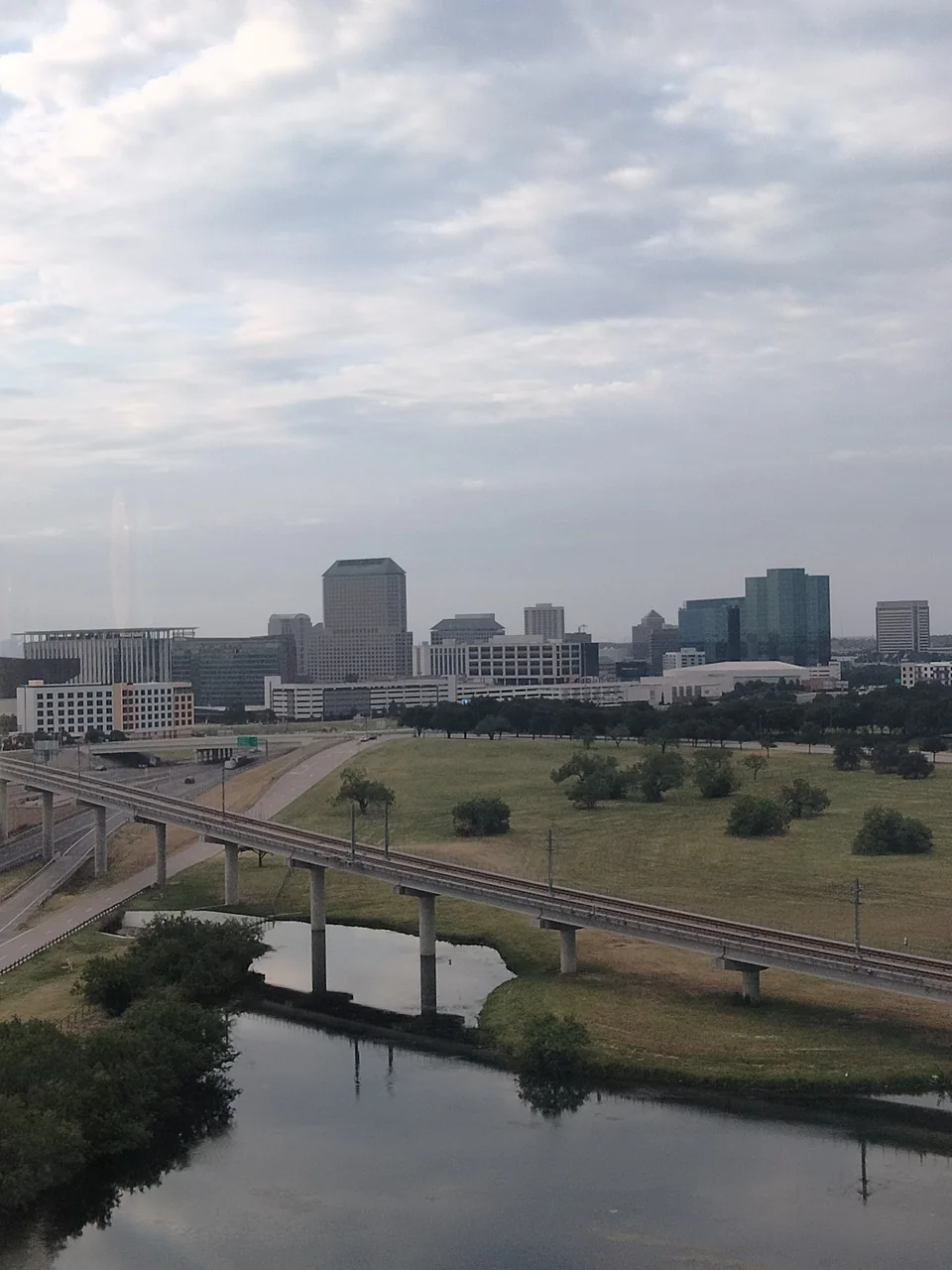
The Las Colinas Association’s architecture tour account identifies Williams Square Plaza as the home of Robert Glen’s sculptures. Its history of Las Colinas describes how the work and plaza came together and includes historical images. Use those sources for a view of the sculpture and context for the site. The photograph illustrating this article shows architecture elsewhere in Las Colinas.
Use a wide view to understand what runs across the square
Pause in a public area with room to see the work and let your eye move along the line of horses. Notice which figure first draws your attention and which part of the group appears behind it. Try following the shape of the watercourse as well. Its relation to the figures is part of the design. A broad look can give you a way to understand why a photograph of one horse shows only one part of what the artist was doing.
Some visitors first encounter the piece while moving through the plaza toward a building. Make time to turn and look back from a suitable place. Pay attention to where the surrounding architecture enters your view. At a distance you may be able to see parts of the plaza and towers behind a horse that dominates the frame closer in. A group can compare what each person saw first and agree on a permitted place to stand for its second view.
Give a closer view a different job
Choose one figure or a small part of the group to observe. Instead of trying to see every surface, watch how one position contributes to the appearance of movement. Think about which parts of the body make it seem to be turning or stepping into the next movement. Look where its shape connects visually to another horse or a line in the plaza. A closer view can make a small detail clear while requiring you to remember how the figure sits within the whole view you just saw.
Move to another public viewpoint if it lets you see what you missed. Stay in designated visitor areas and respect any boundaries around the water, artwork and office entrances. A different angle is enough. Give yourself space to look from a place where other people can also move through. If a group is already gathered where you wanted to stop, choose another spot and compare the two views in a different order. The aim is to see the work from angles that are actually available that day.
Compare a few positions across the herd
The association’s history describes Glen’s development of small models and selection of nine horses for the completed piece. It also discusses the foundry work and the installation in 1984. Looking at repeated poses and differences in the finished group is a way to think about that choice. One horse may look steady from a certain position, while part of another figure seems to disappear against the one beside it. From farther along the group, both bodies might become easier to distinguish.
Consider which figure you would point out if someone had only a moment to look. Tell them why it caught your attention and where you stood. A visitor interested in drawing may focus on an outline. Someone curious about animals may prefer to compare the stance of two horses. These are ways to work with the visible details. The Smithsonian’s sculpture inventory entry supplies documentation you can read alongside what you observe.
Keep the constructed setting in view
The towers, stone and water are parts of the public setting in which the sculpture works. A wide view may show a contrast between the towers’ geometry and the curve of a figure. Another angle may show how the watercourse leads the eye across the plaza, with an office building behind the last horse. Use the architecture tour account and historical publication to find how the setting and sculpture were planned alongside each other. Then look at one feature to see how much of it can still be understood from where visitors stand.
The association’s account of Robert Glen describes the commission and the making of the work. Its photographs and other documentation give context for somebody who wants to see the sculpture before making the trip. Pick one view that the published materials make easy to recognize and think about what is visible outside its frame when you arrive. There can be as much to learn about the setting as about the appearance of an individual horse.
Plan a short visit around access, daylight and space
The association identifies Williams Square in the Las Colinas Urban Center, and the Smithsonian record identifies its Williams Square location. Use current venue and city information when determining how to arrive or where to park. A group can choose a recognizable public meeting spot before setting out. If you are arriving on foot from a separate place, confirm the streets and permitted path you will use. Give people enough time to make their way to the agreed spot before you start looking at the work.
Look for the visitor guidance on the day if the plaza is busy or an area is temporarily unavailable. A person with particular requirements for the approach can ask about the route before the visit. Build the plan around a place where the whole group can stop comfortably, and make a second viewpoint optional. Daylight and reflections may also affect which shapes are easiest to see. Record the time and place if the group wants to compare how the work looks on another visit.
Give a child or a first-time visitor a practical question
You might ask which horse looks farthest ahead from the place where everyone is standing. Then ask whether the answer changes when the group takes a few steps to another safe position. Another question is which figure would look different if its neighbor were absent. Give younger visitors time to point out what they mean in their own words. The sculpture’s place in the square makes it possible to play with the way different views work without having to know much in advance.
For adults who like architecture or photography, ask whether the same angle gives a good view of a horse and of the space the group occupies. A composition that makes one figure prominent can cut off the end of the group. A wider photo can show the plaza while making individual areas less distinct. Take in the scene before deciding if and where to photograph it. Follow posted directions. If you share an image or observation later, include the viewpoint rather than relying on a description of the whole square.
Consider what the water adds to the figures
One question visitors can carry between viewpoints is how the figures seem to meet the setting under their feet. The association's history describes a granite watercourse. When the configuration is visible, look at how the bank or the line of the water contributes to the way the animals seem to cross the space. A different view can put more attention on an individual leg or head. Keep a wide view in mind even when you come nearer. The space around the group is part of what gives individual poses a direction.
Operations and conditions at a fountain may vary. A person can still look at the sculptural composition in relation to the paved plaza and its surroundings. If you are planning to see a particular effect, check what the venue says for that day. For a short visit, an interesting view you can reach is enough. The history and drawings can add a view from a different time without turning an ordinary stop into a long excursion.
Try comparing your observation with someone else’s. They may have followed a single horse, taken in several at once or noticed the built feature that directs the first look.
Follow the question back to a primary record
If the first visit brings up a question about the choice of the horses, start with the association’s history. If you are trying to locate or identify the artwork precisely, start with the inventory description. The Williams Square tenant information about the Mustangs exhibit describes materials about the work. Check the current visitor arrangements before relying on an interior stop. Give a return visit its own purpose if the outdoor views already took the time you had.
A good note can be short. Record where you looked first, which part of the group changed the most when you moved and what you still want to know. A person returning at a different time can use that note to see what seems familiar and which shapes stand out under different light or from another usable route. Williams Square is a clear place to start looking at how a public artwork takes advantage of the space around it.
Read more neighborhood features in the Las Colinas News archive.
Sources
- Las Colinas Association’s architecture tour accountlascolinas.org
- history of Las Colinaslascolinas.org
- Smithsonian’s sculpture inventory entrysi.edu
- association’s account of Robert Glenlascolinas.org
- Williams Square tenant information about the Mustangs exhibitthetowersatwilliamssquare.info